
A Spiritual Travel to The Vodun Festival in Benin
01-08-2025
Forget what Hollywood sold you. Vodun, as it’s called in Benin, isn’t about pins, dolls, or dark magic. It’s a living, breathing spiritual tradition built on ancestral connection, healing, and deep community ties. If you are a planning a spiritual travel to the quiet coastal town of Ouidah in Benin, around the annual Voodoo Festival held on January 10th, here is what you can expect.
Fire dances, masked spirits, and drums echoing through the air – the spectacle may seem surreal and theatrical to outsiders. In truth, it is faith in motion – a sacred ritual practiced openly with pride, in a land where Vodun is not just respected, but central to identity. These ceremonies aren’t staged for tourists. They’re for the ancestors. For the spirits that guide everyday life.
For anyone from the African diaspora, it hits even deeper. Being here is more than a voyage – it’s a spiritual homecoming. A chance to feel something ancestral stir. To see a tradition that hasn’t been filtered through colonial lenses. This is Vodun in its raw, powerful form
Key Takeaways
- The real Vodun is not dark magic, it is a celebration of culture, spirits, and ancestral power.
- For members of the African diaspora, a visit to Benin offers a profound sense of homecoming, healing, and reconnection.
- Visitors are encouraged to engage with humility, curiosity, and care.
- As a spiritual experience, consult Fâ diviners for wisdom and insight, visit sacred groves and ritual markets and experience spiritual cleansings and healing rituals.
- Visit Ganvié – a stilt village floating on Lake Nokoué, founded by the Tofinu people fleeing slavery.
Vodun vs. Voodoo: What’s the Real Story?
Hollywood spun tales of horror, but the real story runs deeper. Let’s clear something up – far from the clichés of curses and dark magic, Vodun and Voodoo are sacred systems rooted in reverence, rhythm, and the enduring resilience of African spiritual traditions.
Vodun is the original West African spiritual tradition – alive and well in Benin, Togo, and parts of Nigeria and Ghana. It’s not a fringe practice. In Benin, Vodun is a recognized religion, woven into daily life. It’s how people seek healing, resolve conflicts, bless the harvest, and honor ancestors. It’s a system of respect toward spirits, toward nature, and toward community.
Voodoo, on the other hand, is Vodun’s diaspora cousin. It traveled across the Atlantic in the hearts of enslaved Africans, reshaping itself in Haiti, Louisiana, and beyond. There, it merged with Catholic saints, indigenous beliefs, and survival.
So, when you’re in Benin, and someone invites you to witness a Vodun ritual, go with an open mind. What you’ll find is nothing to fear as its tradition is built on faith.
The Vodun Festival in Ouidah
The Vodun Festival begins at sunrise, with drumbeats echoing through the air. Priests and priestesses dressed in white robes pour libations of water or palm wine into the earth, calling on the spirits for guidance and protection. The rhythm of the drums grows louder, drawing people into a trance-like energy that sweeps through the streets. Locals and travelers alike are pulled into the current, as centuries-old rituals unfold before your eyes.
Egungun Masquerades
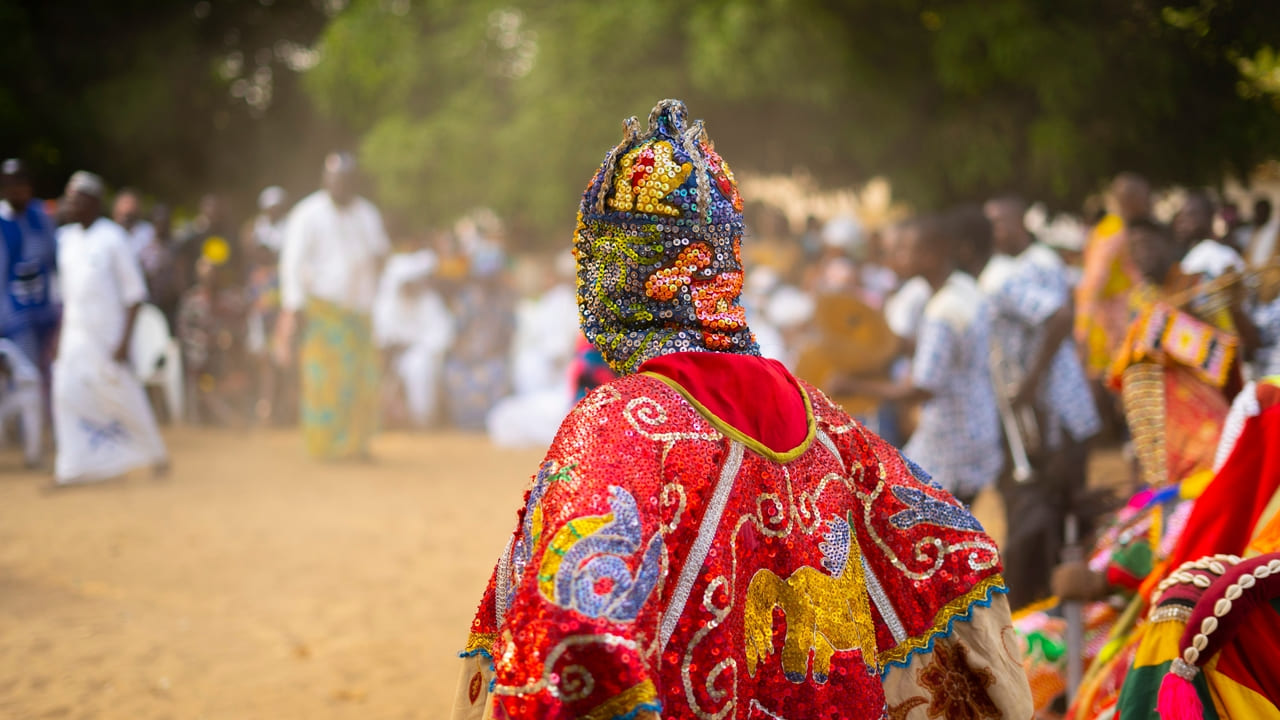
Egungun Masquerades – mediums between the physical and spiritual worlds.
Egunguns arrive like spirits summoned from another realm. They are towering figures draped in layers of vivid fabric, their faces hidden behind ornate masks. They spin, whirl, and sway through the crowd, each movement is a sacred dialogue with the past. They’re mediums between the physical and spiritual worlds, moving with power and purpose. Their presence calls to the spirits of the departed to be a part of the present moment.
Spirit Dances: Movement as Prayer
As the ritual intensifies, dancers enter the scene, their bodies channeling spirits through every spin and stomp. These are not choreographed performances, they’re spiritual transmissions. Possession is not feared here – it’s embraced. You may see devotees collapse into trance, carried by rhythm and reverence. The line between the living and the spirit world becomes beautifully, powerfully blurred.
Python Processions
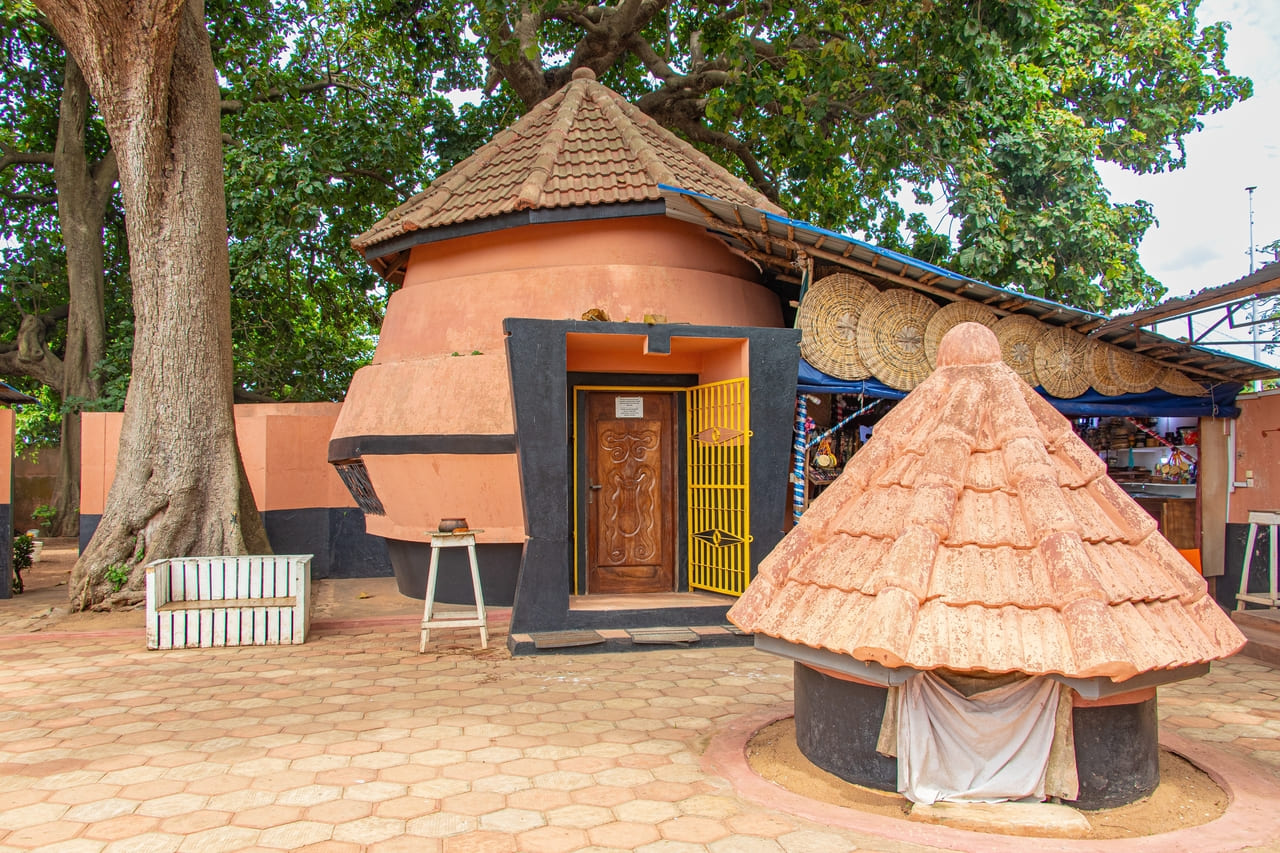
Temple of the Sacred Python – where sacred serpents symbolize the divine.
For visitors, it’s a chance to challenge misconceptions and witness how nature and spirituality are intertwined in this part of the world. Book an immersive trip with us and experience Vodoo Day at Ouidah, Benin.
Dahomey: A Kingdom of Unbreakable Legacy
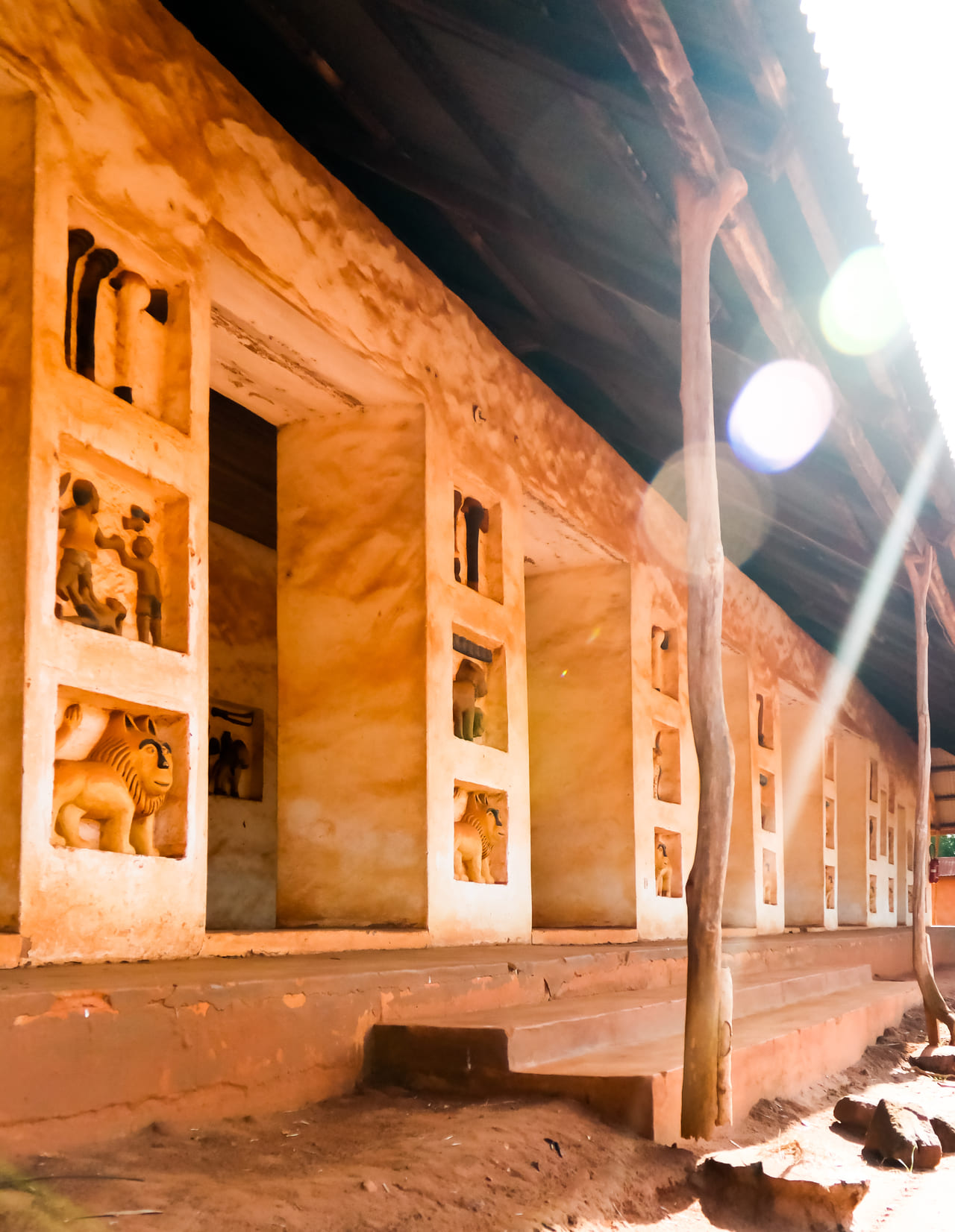
Royal Palaces of Dahomey – a UNESCO heritage site where kings and spirits are honored.
Before colonial borders, the Kingdom of Dahomey reigned proudly for over 200 years from its capital, Abomey. It was a kingdom unlike any other – ruled by powerful kings and guarded by the Agojie, an all-female military regiment known in the West as the “Dahomey Amazons.” They were elite warriors who defended the realm with unmatched ferocity.
Today, Dahomey’s legacy lives on in its royal palaces, rituals, and festivals. Walk the red earth of Abomey and you’ll feel the presence of ancestral drums, sacred councils, and warrior queens.
Abomey’s Ancestral Festival: When Kings Return
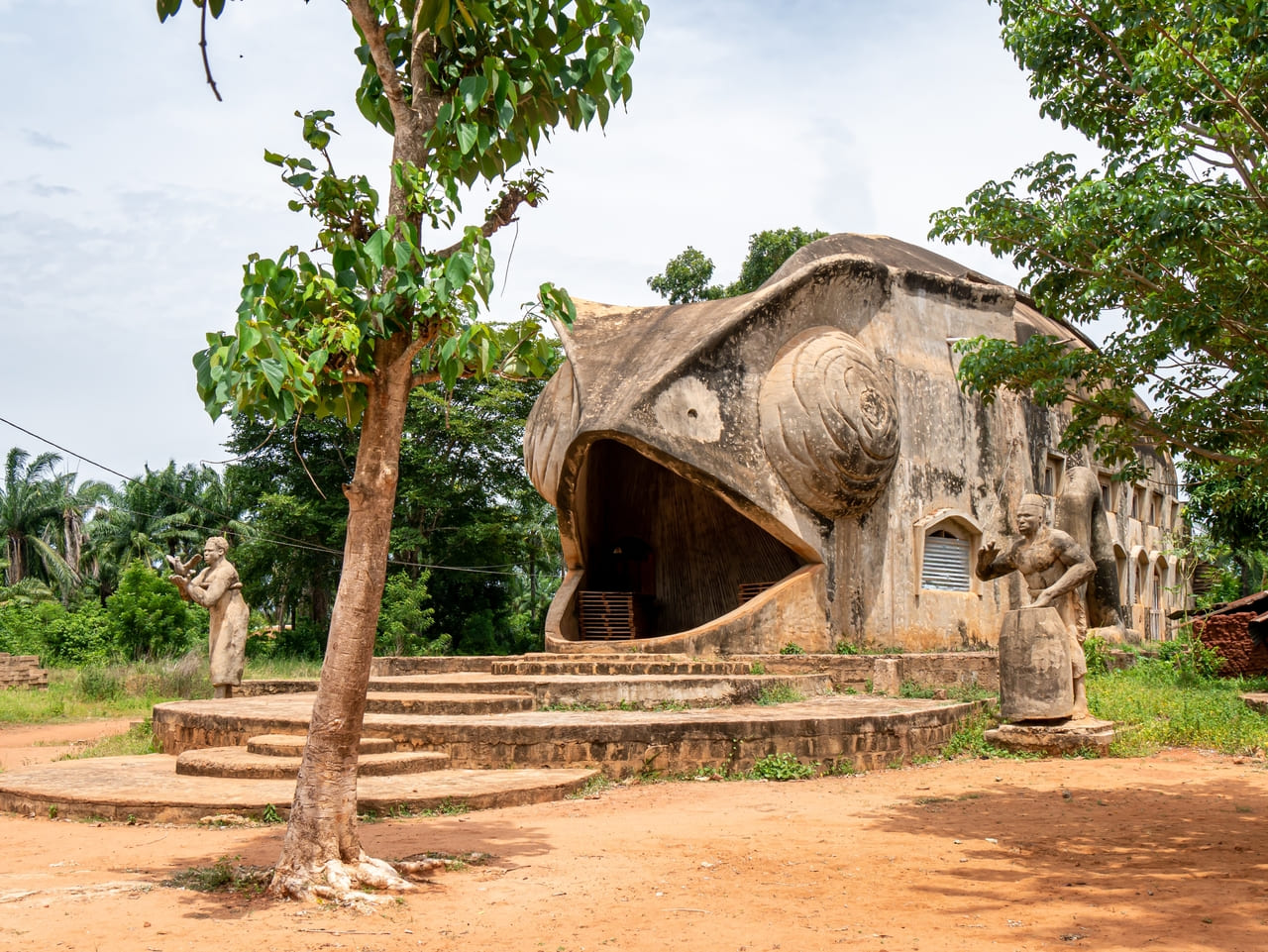
A Chameleon-shaped Vodun Temple, Abhomey.
Each September, the old royal capital comes alive for the Ancestral Festival – a vivid, spiritual homecoming. In front of the UNESCO-listed royal palaces, elders in crimson robes pour libations, priestesses dance in trance, and royal descendants whisper coded prayers to call the spirits.
In Vodun belief, ancestors don’t belong to the past, they lead the present. Indigo-wrapped women toss shea butter, kola nuts, and coins into the crowd – symbols of abundance. It is a kingdom remembering itself.
Spiritual Awakening and Cultural Reconnection
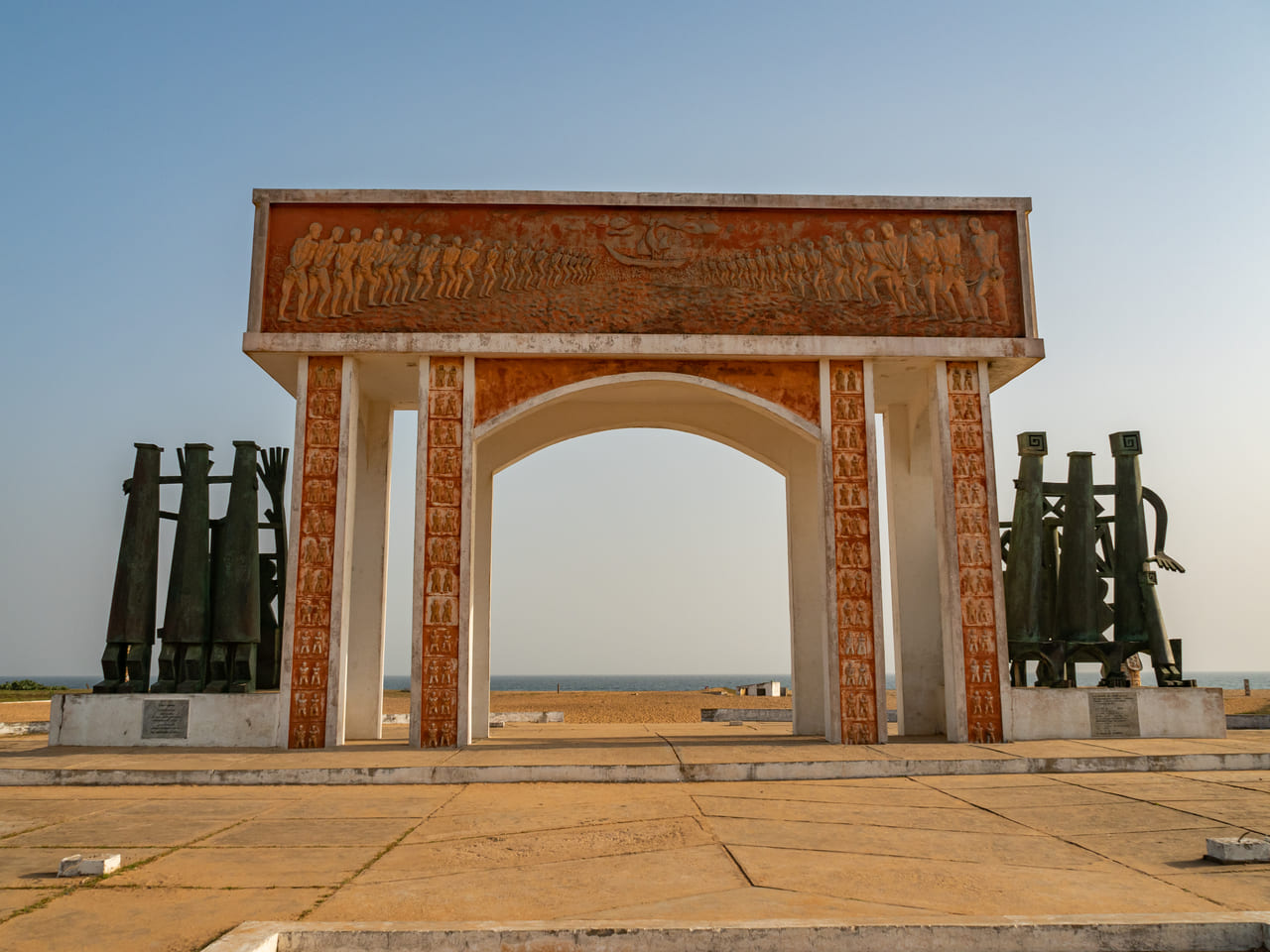
The Door of No Return – a solemn memorial to enslaved Africans.
For diaspora travelers, it’s often a deeply emotional return – to a land, a legacy, and a language of spirit that colonial history tried to erase. This is about remembrance, resilience, and reclaiming sacred traditions.
As a spiritual traveler, you don’t just observe the rituals, you feel them in your body and soul. Whether you’re seeking a deeper understanding of African spirituality, longing for ancestral connection, or simply open to the mysteries of human faith, Ouidah’s Vodun Festival will stay with you long after you’ve left.
If you are feeling the pull, start your Benin journey with FlyingCarpet.Travel. From the US, you can fly Royal Air Maroc via Casablanca, Brussels Airlines via Brussels or Turkish Airlines via Istanbul.
Take a two-week long trip in west Africa to unearth the roots of Voodoo.
FAQs About Visiting Benin
1. Where is Benin?
Benin is a vibrant West African nation located between Nigeria to the east and Togo to the west, with Burkina Faso and Niger forming its northern border and the Atlantic Ocean to the south. The commercial heart is Cotonou, while Porto-Novo serves as the official capital.
2. What are the Benin Bronzes?
The famous Benin Bronzes originate not from the Republic of Benin but from the historic Benin Kingdom located in present-day Nigeria. These ornate brass plaques and sculptures were created by highly skilled artisans and looted from the royal palace of Benin City by British troops in 1897. Today, they are scattered across museums in Europe and the US, yet they continue to evoke the grandeur of precolonial African artistry and royal heritage.
3. Do US citizens need a visa for Benin?
Yes, Americans require a visa to enter Benin. Thankfully, the process is straightforward with the online e-Visa system. You can choose from 30-day single entry, 30-day multiple entry, or 90-day multiple entry options. It’s best to apply at least five days before travel.
4. Is Benin safe to visit?
Benin is considered one of the safer countries in West Africa for travelers. Tourist-friendly cities like Cotonou, Ouidah, Abomey, and the floating village of Ganvié are welcoming and culturally rich. As always, stay aware of your surroundings and avoid border areas near Burkina Faso due to occasional instability.
5. What are accommodations like in Benin?
Benin offers a range of accommodations to suit different budgets, especially in Cotonou and Ouidah. You’ll find cozy guesthouses, boutique hotels, eco-lodges, and heritage stays. In Ouidah, lodges near Vodun sites enhance the spiritual travel experience, while Ganvié offers lakeside guesthouses near the floating village. Expect mid-range prices between $40–$120 per night.
6. When is the best time to visit Benin?
The best time to travel to Benin is during the dry season from November to March, when skies are clear, humidity is lower, and roads are more accessible for exploring cultural sites and attending festivals. January is especially popular. Avoid the rainy season especially June and July, when heavy rains make some rural areas harder to reach.
7. Do I need vaccinations to travel to Benin?
Yes, proof of yellow fever vaccination is required for entry. It’s also recommended to get vaccines for hepatitis A and B, typhoid, meningitis (especially in dry season), and routine shots like MMR and tetanus. Consult your doctor about malaria prophylaxis and bring mosquito repellent, especially if visiting rural areas.
8. What should be the most important mindset to carry during spiritual travel?
Be a listener more than a speaker. Show humility and reverence, follow the lead of the locals. Observe quietly, ask permission before photographing, and honor rituals without interruption. Come with an open heart, not just a camera.
9. How can I make a positive impact while traveling?
Support local communities by buying directly from artisans, choosing local guides, and staying at locally owned accommodations.