
In 2026, Japan Airlines, ANA, and Singapore Airlines lead the pack for long-haul economy comfort, thanks to genuinely wider seat pitch and calmer cabins, with Qatar Airways and Cathay Pacific close behind on Middle East and Asia routes. The seat and aircraft matter more than the logo on the tail.
Ten hours in economy doesn’t have to mean numb legs and a stiff neck. In fact, long-haul economy comfort comes down to three things: seat pitch, cabin environment, and which aircraft you’re actually flying on that day. Get those right, and the flight becomes forgettable in the best way. Get them wrong, and you land needing a nap before your trip has even started.
What actually drives long-haul economy comfort
It’s not the fare you paid. A budget ticket on the right aircraft can beat a full-price seat on the wrong one. Specifically, what matters is:
- Seat pitch and width — the difference between knees against the seatback and actual room to shift
- Cabin layout — 8-abreast feels worlds apart from 10-abreast on the same aircraft type
- Cabin altitude and humidity — newer widebodies like the 787 and A350 pressurize cabins lower, which means less fatigue on arrival
- Meal and service timing — a well-paced cabin lets you sleep instead of being woken for a snack at the wrong hour
The airlines, compared
These rankings track closely with the annual Skytrax World Airline Awards, which surveys millions of passengers on exactly these comfort factors — so the pattern isn’t just anecdotal. If you’re weighing a specific carrier not covered here, our Airline Spotlight guide to Norse Atlantic breaks down another strong long-haul option on transatlantic routes.
Japan Airlines — the standout for space. JAL runs an 8-abreast layout on select 787s instead of the usual 9-across, which translates into noticeably more shoulder and legroom for the same ticket price.
ANA — sits right alongside JAL on seat comfort, with a similar focus on generous pitch and a calm, quiet cabin that holds up well on ultra-long sectors.
Singapore Airlines — less about raw space, more about consistency. Ergonomic seating, well-paced service, and a cabin environment built around actual rest rather than constant activity.
Qatar Airways — a strong all-rounder, particularly on Europe–Asia–North America routes, with a standardized cabin experience that rarely dips below a solid baseline.
Cathay Pacific — favored by frequent flyers for calm, understated cabins that prioritize quiet over spectacle — ideal if you actually want to sleep.
Korean Air — the sleeper pick. Wider seats and an 8-abreast (rather than 9-across) layout on many 777s make a real difference over a long sector, even if the brand gets less attention than its neighbors.
How to actually book the good seat
Ranking the airline isn’t enough — the seat differs by aircraft, and even the best carriers fly older jets on some routes. Before booking:
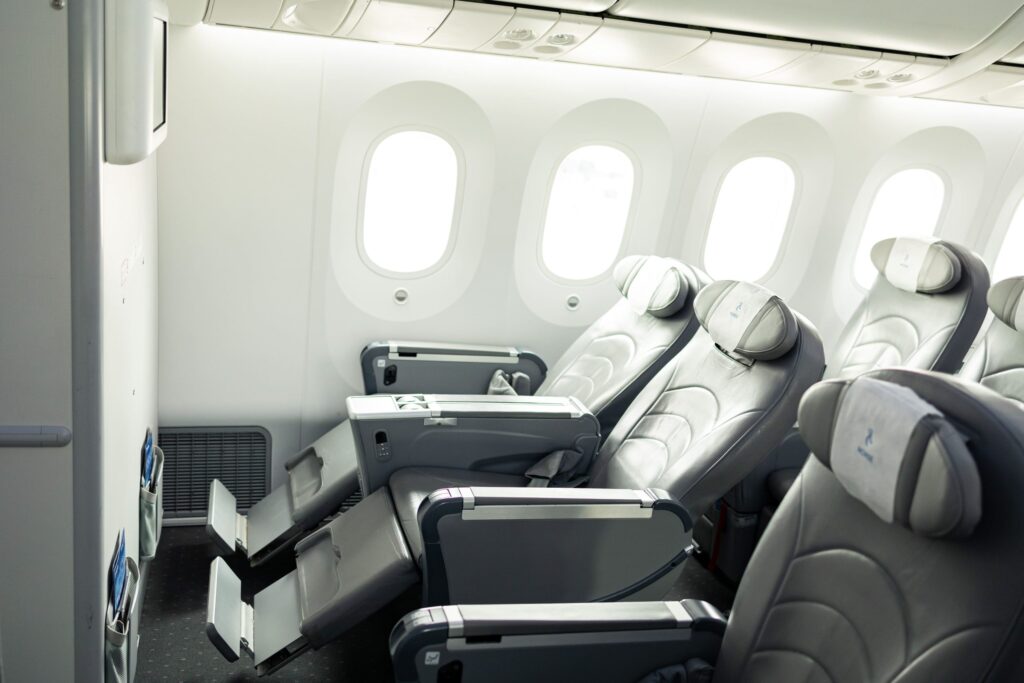
Check the aircraft type on your specific flight number, not just the airline’s reputation. A great airline on an old plane can still disappoint.
Use a seat map tool to confirm pitch and layout before you pay — don’t assume based on the airline alone.
Book early for extra-legroom rows, especially bulkhead and exit rows, which get claimed fast on popular routes.
Fly the newer widebody when you have a choice — 787s and A350s consistently offer a gentler cabin environment than older 777s and A330s on the same route.
The best long-haul economy experience isn’t about paying more — it’s about knowing which aircraft and airline combination actually delivers. That’s the part FlyingCarpet.Travel helps take off your plate: we know which routes put you on the right plane, not just the right airline, so the flight itself stops being the part of the trip you have to endure.