
Africa’s Tribal Jewelry: Explore Tradition During Your Cultural Travel
08-08-2025
When you travel across Africa, one of the most eye-catching things you’ll notice is the jewelry worn by men and women. But when you dig a little deeper, you realize it’s not just for decoration–Africa’s tribal jewelry tells stories. Beads, shells, metals, and even copper wire carry centuries of meaning, tied to beauty, identity, status, and spirituality.
In many African ethnic tribes, jewelry is a cultural marker as important as language or clothing. It’s how communities pass down heritage, celebrate milestones, and express identity.
If you’re on a cultural tour in Africa, paying attention to the details of ornaments opens a whole new layer of understanding.
Here’s a closer look at what they mean, and where you can see them:
Key Takeaways
- African Tribal Jewelry Tells Stories: Each piece reflects identity, status, tradition, and spirituality.
- Marks Social Roles: Jewelry indicates age, marital status, and community standing.
- Expresses Beauty & Protection: Beads, shells, and metals symbolize femininity, luck, and ancestral ties.
- Authentic Cultural Experiences: Visit Maasai, Himba, and Zulu villages, artisan markets, and local festivals.
- Support Local Artisans: Learn the story behind each piece and purchase directly to empower communities.
Ornaments as Identity & Heritage
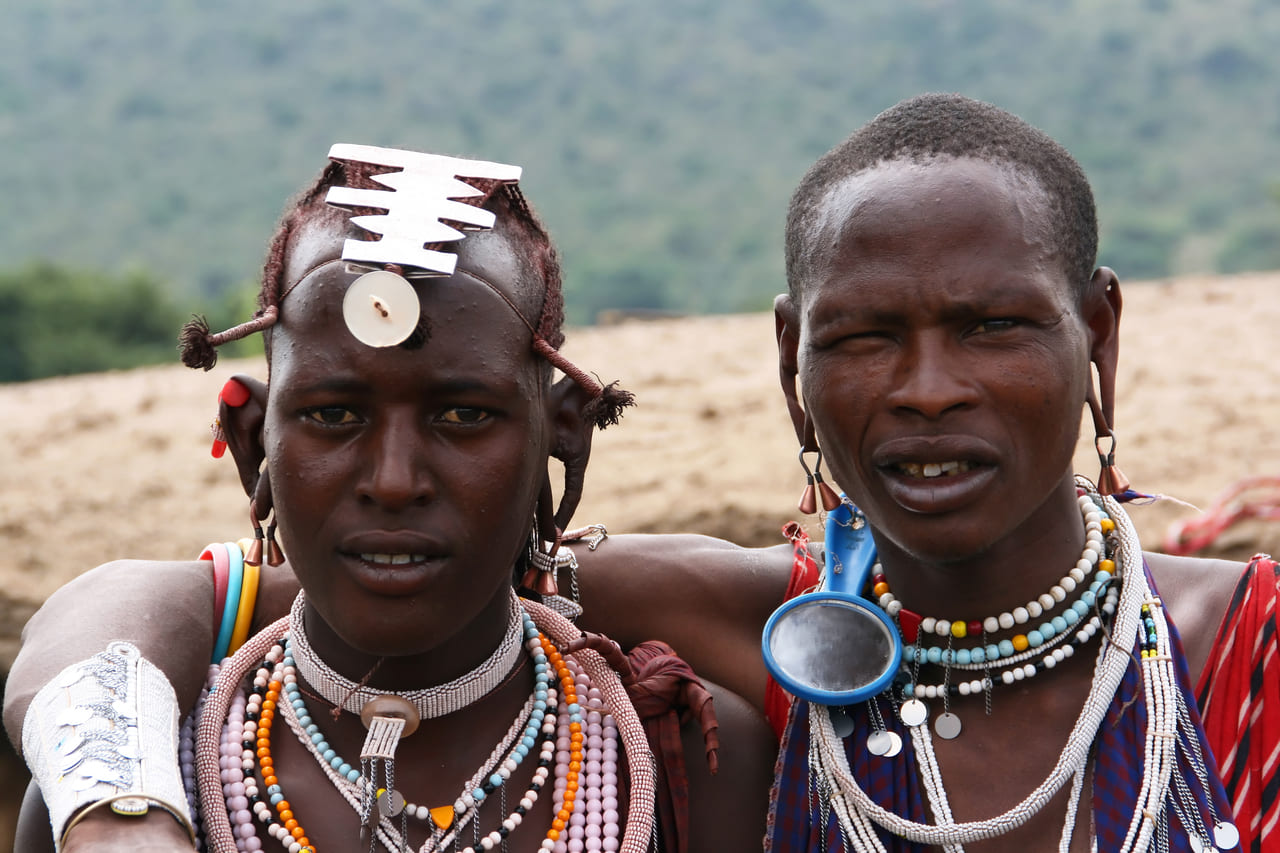
When you visit Maasai villages, you’ll often see men and women wearing large, beaded collars that aren’t just beautiful, they’re declarations of who they are.
For the Maasai of Kenya and Tanzania, the colors, patterns, and material used often reveals the wearer’s community or role within it. Every pattern of the beaded jewelry tells a story about their identity, age, marital status, or role within the community.
Among men, certain beads, metals, or ornaments show a man’s social standing, achievements, or even warrior status. Red speaks of bravery and strength, white reflects purity and health and blue carries the energy of the sky and water.
From weddings to initiations, ornaments play center stage. At a Maasai wedding, a bride’s elaborate beaded collar symbolizes her family’s pride and blessings for her marriage. These ceremonies give travelers a vivid glimpse into how deeply traditions endure.
Learn about Maasai beadwork and pick souvenirs as you interact with the unique Maasai culture.
Jewelry as Social & Marital Status for the Himba

The Wataturu, a small ethnic group in northern Tanzania near the Rift Valley, wear copper jewelry to signify social status, age, and beauty. And the Datoga – pastoralists in the Manyara and Arusha regions, use metal jewelry, beads, and lip plates to indicate marital status, age, and community standing.
Similarly, for the Himba women from Namibia, jewelry is like a diary written in beads and metal, shifting with each transition from youth to marriage to motherhood.
Necklaces, anklets, and headpieces often serve as status markers and tells you whether a woman is single, married, or a mother. Wearing gold, ivory, or brass jewelry can signal prosperity and influence, much like crowns or badges in other societies.
Embark on a 3-day tour to a Himba village in Namibia, to learn about one of the last semi-nomadic tribes and more about their jewelry.
Jewelry Stands for Beauty & Femininity for the Zulu
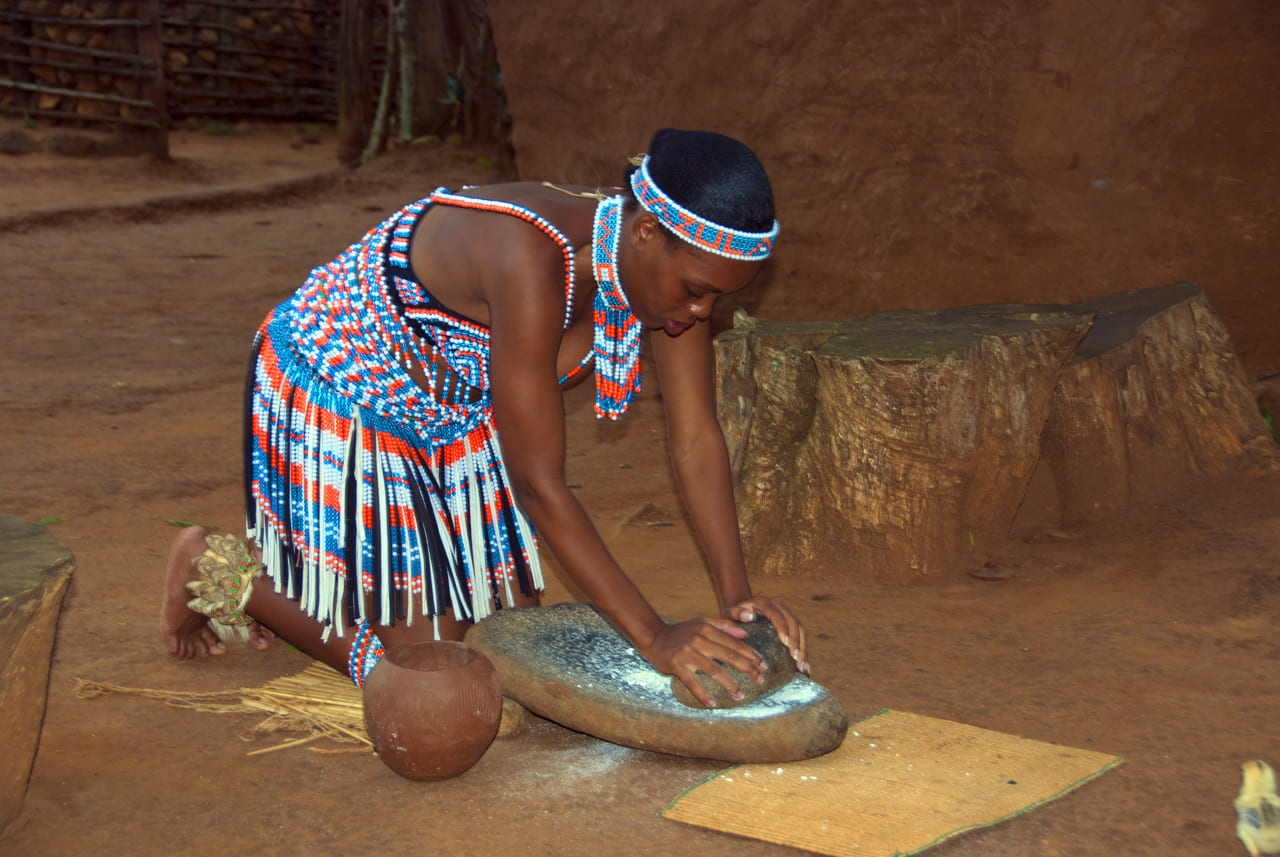
In Africa, beauty isn’t just in the face, it’s in the details of adornment. The Zulu of South Africa use brightly colored beadwork to highlight femininity, elegance, and grace. Bracelets, anklets, and necklaces often act as visual signatures of charm and allure.
Book a culturally immersive trip with us to a Zulu village. Meet the Lime and Imphepho Gogos – the respected female elders in the markets of Warwick, a lively hub that pulses with indigenous culture. Witness the artistry behind their handmade creations.
Africa’s Tribal Jewelry for Spiritual Protection
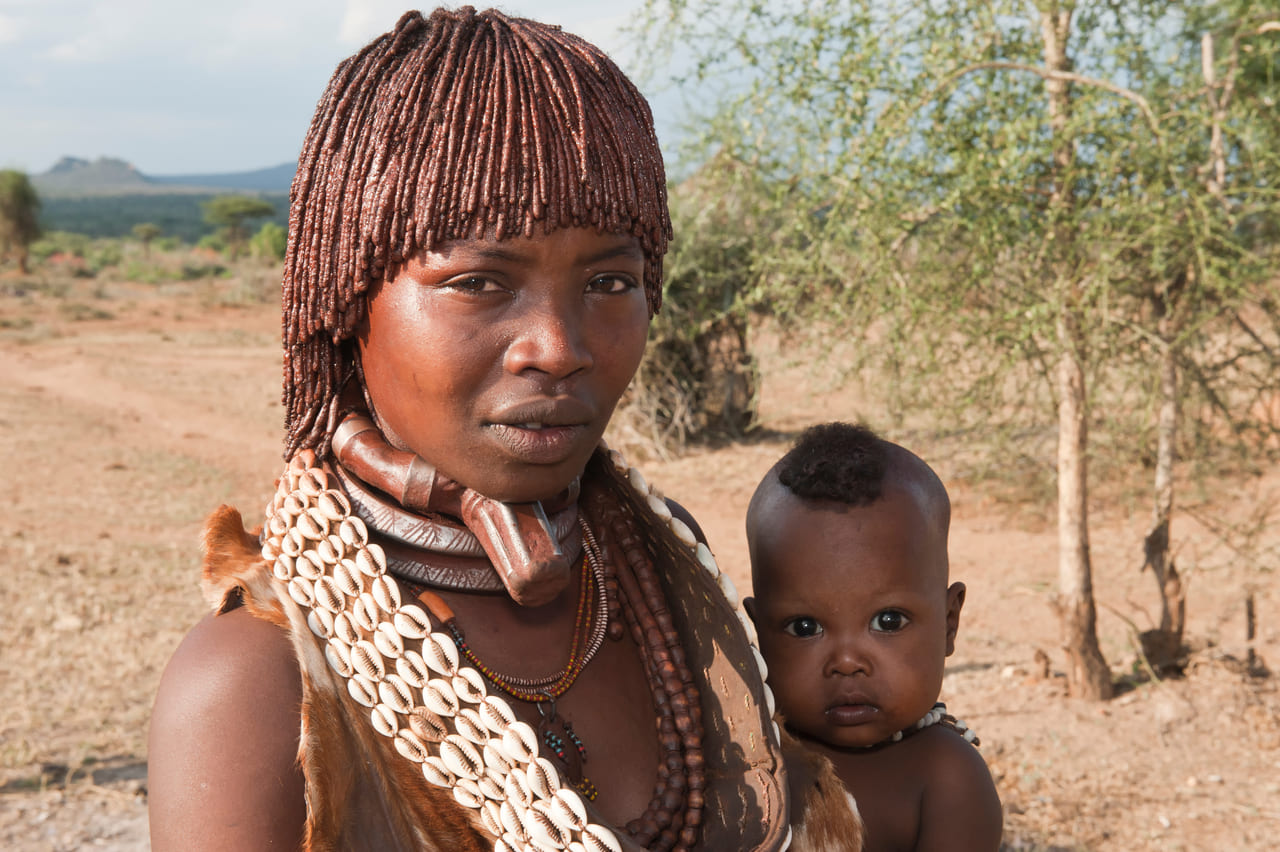
When traveling in East or West Africa, you’ll often find jewelry stalls where items double as both fashion and faith. Many carry spiritual weight. Amulets, charms, or cowrie shell necklaces are often believed to protect against evil, bring luck, fertility or strengthen one’s connection to ancestors.
Cowrie shells, for instance, have long been treasured across Africa, especially in West African cultures like the Yoruba and Ashanti, where they symbolized wealth, fertility, and spiritual power. Today, you’ll still see them in jewelry, rituals, and festivals across East, West, and Southern Africa, carrying stories far beyond their beauty.
Why Stories Behind African Jewelry Matters for Travelers
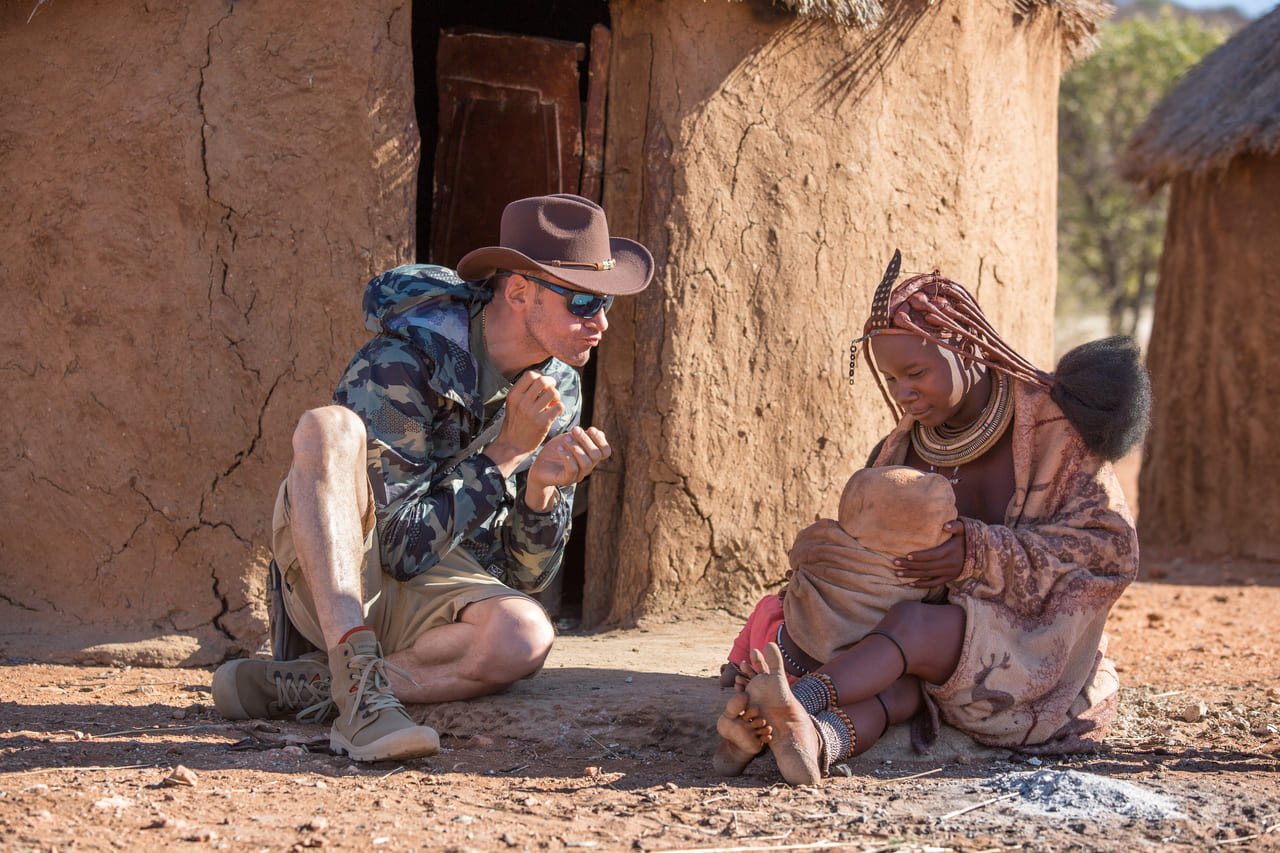
Traveling through Africa, you’ll discover that tribal jewelry isn’t just decoration, it’s tradition in motion. Each piece tells a story, revealing how deeply personal adornments are woven into community life. By paying attention, you connect with the heart of the communities you meet. Explore FlyingCarpet.Travel and embark on an immersive cultural journey through Africa today.
Africa’s Tribal Jewelry: FAQs for Cultural Travelers
1.What do Africa’s tribal jewelry represent?
A: African tribal jewelry acts as a cultural archive, reflecting identity, community values, and personal milestones like marriage or motherhood.
2.Where can travelers experience cultural heritage firsthand?
A: At local craft markets, cultural villages, and traditional festivals across Africa.
3.Why not just buy souvenirs?
A: The true value lies in the stories and traditions behind the jewelry, something a mass-produced trinket can’t capture.
4.How should visitors approach the artisans on a cultural village tour?
A: Ask questions, listen to stories, and engage with artisans beyond just buying jewelry.
5.How to shop responsibly?
Buying jewelry directly from women artisans ensures your dollars go back into the community. Learn stories behind the pieces, and even ship ornaments home as meaningful souvenirs.
6.Can you suggest a cultural immersive itinerary to Africa?
Here is a sample 7-day cultural immersive tour across Africa:
- Day 1–2: Nairobi → visit Maasai cultural bomas, beadwork workshops
- Day 3–4: Arusha → Datoga & Hadzabe experiences at Lake Eyasi
- Day 5–6: Serengeti safari with cultural evening around a Maasai village
- Day 7: Relaxation & artisan market shopping in Zanzibar